Tuesday, 1 January 2019

Reflecting on 2018


I went out last night to celebrate the new year with my friends Pum & Jay, and got to see some other long time friends of mine: Glenn, Robin, Ian & Jane. As a result we didn't get home until the early hours of the morning, and as a result I've been struggling today from not having slept at all well, which is why this post is going up so late in the day.

Looking back on the year let's see how I did. Words wise, I failed to meet my goal of writing three new novels.

I only managed 77,079 words of new fiction, which is pretty miserable, and a reflection on how miserable I've been feeling. I also wrote 18,799 words for this blog, and 8,287 words for my wargaming blog. In addition, I wrote eight articles for Galactic Journey, which came to 8,650 words.

That comes to a grand total of 112,815 words. The majority of which I did in the first six-months of last year.

This has largely been down to how ill I've been since July. However, I do note that saying this I have managed to write more than the 57,407 words than I wrote in 2017, which I'm going to take as another win, even though back then I had the excuse of having a day job.

However, while I may have spectacularly failed to meet my writing goals I did get my three novels out the door. So I'm counting that as a win. Also, I wrote three novelettes, which are also out of the door. Another win.

So my plan is simple, take the time to get better and then start writing new words.

To finish, as dinner is about to served, I wish all my readers a happy new year.

Monday, 24 December 2018

Merry Christmas 2018


The above picture was taken by my wife as per the technical information listed above. A remarkable piece of photography given that we live in London and one cannot see that many stars with the naked eye.

We've done all the essential food shopping. Anyone would think we were laying in for a siege, and of course the tree is up with presents to be opened.

Anyway, I hope you all will enjoy the break and so I wish you all a Merry Christmas.

Monday, 10 December 2018

More Reading


More books I have read, and as promised a review of A Fistful of Elven Gold by Alex Stewart aka Sandy Mitchell of the Ciaphas Cain series.

Though the title playfully makes one think of the film A Fistful of Dollars, which itself was a homage to Akira Kurosawa's Yojimbo, this tale of a gnome on a mission owes more to Terry Pratchetti with a soupçon of Tolkien for flavour. Not my usual reading, but I thoroughly enjoyed the romp, may there be more.

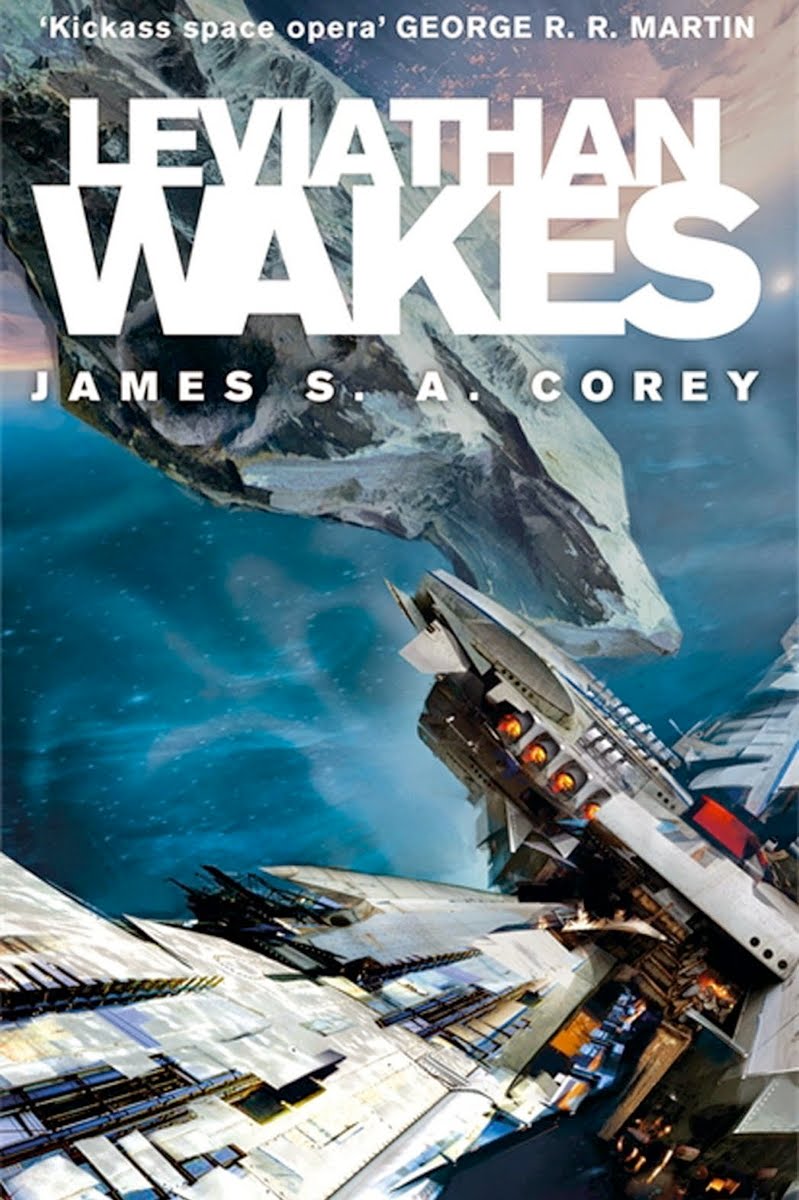
Next up was James S. A. Corey's Leviathan Wakes, which I decided to get after watching the first two seasons of The Expanse.


I wanted to compare and contrast the TV show's treatment of the story with the source material. So this was very much a study assignment. So what I have to say is a reaction to the treatment of the story in two different mediums.

The book covers more than the first season of the show, which for me was a bonus as it resolves the first story arc. However, I can't fault where they broke the story for the show, because it certainly left one wanting more. Good technique.

Story wise I think the show ends up being a slicker version of the book story. The second season therefore also only gives about half the story contained in Caliban's War.


I read the second book while watching the second season of the show. I enjoyed the TV show more because the actors brought the characters to life. Especially, Shohreh Aghdashloo, who plays Chrisjen Avasarala the UN Deputy Undersecretary of Executive Administration. Her performance is riveting.

By the time I reached the end of the show and reading the books I had gained some insights into the similarities and differences between the two forms that arise from the difference between filming a scene and writing it.

After this, and given how I've been feeling, I decided to delve into my to be read pile. I've been putting off reading the last two Iain M. Banks books because it still makes me sad that there won't be any more new Culture stories.

By mistake I read Hydrogen Sonata first, which meant I read them out of publication order. I should've read Surface Detail first, though in fact from the Culture timeline on Wikipedia says the latter takes place after the former. So not really a problem.


Reflecting now on the order I read these two books, I'm glad I chose to read to read Hydrogen Sonata first because I really enjoyed the elegiac feeling that the story provoked as a reflection of Iain's passing. My favourite Culture novel still remains Excession, but this is a strong contender for second place.


Then I read Surface Detail, which was a bit of a curates egg.

It's a richly detailed story, but I found myself disinterested in several of the POVs for different reasons. The Hell universes were just unpleasant, and the time spent in them dragged. The main villain, Veppers, just didn't do it for me. However, what I took away from this was that even an author of Iain M. Banks status doesn't always hit it out of the park.

Thursday, 29 November 2018

Ghost Dog Hardcovers

As the above picture shows, the hardcover copies of Ghost Dog have arrived. I've done the Library of Congress registration and sent copies out to them, and my Beta readers.

As the Star Trek song says, "It's been a long road getting from there to here."

And this being real life and all, there have been some obstacles along the way that I couldn't foresee. But, while the learning curve has seemed steep, I've come a long way in understanding and being able to do the things necessary to bring a book out.

And I've had a lot of fun whilst doing so.

OK, not all of it has been fun, but seeing my books in print and the reviews of the first have all substantiated my belief that I can achieve my goal.

Thursday, 22 November 2018

On Franchises & Reboots


I've been struggling with writing words for a while. However, this week my consultant reduced one of my medications, which seems to have helped. It may be too early too really tell, but I'm sleeping better, and my head is starting to have thoughts again.

Anyway, my blog is a place where I can write about what I write, acting both as a diary and a place to work out ideas. And I have had some ideas about the propensity for Hollywood to reboot popular franchises, and by extension retell the same stories.

My friends on Facebook often ask the question why-oh-why can't Hollywood do new stories, instead of rebooting "old" stories?

Having just finished watching Star Wars Rebels season four I can think of several good reasons for why reboots are so common. The first is simply, money.

Or the cost versus benefits relating to loss.

It's certainly the answer that most people I talk to roll out as an explanation. It makes sense. Risk aversion is part of the human condition and it drives/hinders taking action, which leads to prevarication.

However, if one studies stories, taking time to examine the structure of stories, then it soon becomes apparent that there are a number of forms or plots. Plots have themes, and stories are driven by conflict or opposition.

A long while back I wrote about reading Booker's The Seven Basic Plots. A book that should be titled seven traditional plots and the two or three new ones. OK, I'll admit that's not a snappy title, but then again The Seven Basic Plots is not a snappy book.

There are of course other opinions.

Writers have been writing about writing stories for a very long time. But if I boil the essence of what has been said, it comes down to this. The more you look at stories throughout the ages the more you realise that there are no new plots, only new treatments.

So, from this perspective reboots are more of a feature of story telling, rather than a bug. The big problem of this process is that reboots often fail to provide a fresh treatment, and I would argue that this is what drives peoples dissatisfaction with reboots.

Returning to Star Wars Rebels, and arguably the other animated series in the franchise, what they have managed to do is to bring a fresh treatment of the basic story to viewers. The big failing of The Last Jedi can be reframed as stemming from a failure to make the story feel fresh.

I've been a fan of Star Wars and take an interest in the buzz that surrounds the films. In my opinion, the problems of the prequels and the latest sequel arise from the fear of failure. Lucas and those who follow him are caught by the burden of expectations, which causes them to doubt themselves and lose their trust in the story-telling process.

Stories have structure that readers come to expect. I wrote about this  when I read John Yorke's Into the Woods. That and having quotable dialogue. OK, that's enough for now as we have to go shopping to get some food for tonight's meal.

On that note, let me finish by wishing all my American readers a happy Thanksgiving.

Saturday, 17 November 2018

Gate Walkers Trilogy


All three books are available in ebook, paperback, and hardcover. The ebooks are all now $4.99, and if you buy a print copy at the same time there's a matchbook deal to get both together.

Wednesday, 14 November 2018

From Russia with Love


I wrote this piece for the retro chronicles of Galactic Journey. It didn't get used, but rather than letting it go to waste I present it now.

The sequel to Dr. No has arrived with much fanfare. Highly anticipated by the general public and James Bond fans alike. Aficionados of the books will not be disappointed by the film, which raises the bar for the film franchise.

The opening sequence that follows the United Artists logo is the same as Dr. No. A series of white circles resolves into a scene of James Bond walking along, as seen through the barrel of a gun. The tempo of the music rises with the twang of the guitar acting as a counterpoint to the main rhythm. The audience is captivated, and a hush descends over the auditorium as we cut to a night scene.

Here we're shown Sean Connery stalking through the grounds of a mansion, while in turn being shadowed by a tall blond thug who gets the drop on our hero, killing him with a garrotte: a wicked-looking wire that the villain draws from his wristwatch. And for a moment the film teases us with Bond's death.

However, all is not what it seems.

Lights from the mansion reveal this to be a SPECTRE training ground, and the dead Sean Connery, a man wearing a convincing rubber mask. The music by John Barry then plays the theme tune as the opening credits are presented, the words moving over scantily clad women dancing to the theme tune.

It is mesmerizing. Everybody in the auditorium is silent with anticipation of what comes next. The sheer audacity and inventiveness of the opening having overridden the usual rustling and coughs that accompany most films. I've never experienced anything like it before.

With this film, James Bond has become a phenomenon that transcends the limitations of its genre, turning into a spectacle that sweeps the viewer into the exotic world of espionage.

Then the audience is introduced to the plot via the introduction of the villains discussing their plans.
We meet three of SPECTRE's leaders: Number One, the chief executive who remains unnamed during the film; Number Three, Rosa Klebb a former Russian SMERSH agent who has defected to SPECTRE; and Number Five, Kronsteen who is SPECTRE's chief planner.

During this exposition we only see Klebb and Kronsteen, with the camera cutting between their faces and the hands of their leader who strokes a white cat as he listens to the details of the complex plot of From Russia with Love.

Kronsteen has devised a scheme that involves luring the British with the opportunity to get their hands on a Russian cryptographic machine, called a Lektor, which is used to decode orders sent by Moscow. The operation will take place in Turkey, which lies between Russia and the West. The plan involves playing the British intelligence station against the Russian consulate, and in the confusion steal the Lektor from the British, who will get the blame for stealing it from the Russians.

Klebb's assesses Donald "Red" Grant, the male agent who we saw in the opening sequence garrotting Sean Connery, who is tasked with killing Bond for real this time. But ordered to wait until after 007 retrieves the Lektor. Klebb then dupes a beautiful woman from the Russian consulate into believing she's working for Russian intelligence, to lure Bond to retrieve the Lektor.

Interestingly, there is a sexual frisson in both these scenes, revealing Klebb as a sexual predator, when she displays undue interest in both the male and female agents she recruits.

From here the film switches to London where M informs James Bond that the cipher clerk Tatiana Romanova has fallen in love with him, and wants to defect to the West, bringing with her the top secret Lektor device. Both Bond and M understand this is a "Honey Trap," but the chance to get hold of the Lektor is too good to turn down.

The audience knows SPECTREs plans, and the sudden excitement this produces when watching the film is physical. One really fears for what will happen next.

Before setting off to Istanbul, Bond is supplied with a special attaché case with a tear gas booby trap containing a folding AR-7 Armalite sniper rifle. The case also comes equipped with a throwing knife. All will be used during the film.

Bond travels to Istanbul and meets up with Kerim Bey, the British intelligence station chief, who will help 007 retrieve the Lektor. Bey describes to Bond the situation in Turkey where the British and Russians have a truce of sorts. Both sides routinely spy on each other, but use proxies for plausible deniability when taking action against each other. The British have in their employ gypsies and the Russians use their Bulgarians allies.

Then the SPECTRE plans kicks into action as Red Grant kills a Bulgarian secret agent tailing Bond and Bey to provoke the Russians into attacking the British. Their response is to bomb the British intelligence station.

This forces Bond to leave Istanbul until things cool down. Bey takes him to a gypsy camp, but soon after they arrive the Bulgarians attack, and everyone is as each other's throats. The action comes thick and fast demonstrating how effective Red Grant is in shadowing Bond.

The plot twists and turns, luring us deeper into the world, until Bond meets Romanova who is waiting for him in his bed. Unknown to them both, SPECTRE has set up a camera to film their love making, which they plan to use this to discredit Bond and British intelligence.

The plot then focuses on Bond and Bey's plan on how to steal the Lektor. Afterwards Bond escapes with the Romanova, and Bey aboard the Orient Express. However, they are being tailed by a Russian security officer who has to be dealt with.

This results in the death of Kerim Bey, Bond's ally at the hands of Red Grant, who has proved himself to be a formidable adversary. Unlike Bond, the audience is aware that Red Grant has been shadowing the hero throughout the film. So the viewer is left wondering when the villain will strike next.

When Red Grant appears, pretending to be an agent sent by M to help Bond, it raises the tension further. When the confrontation kicks off, the fight between them is fast, furious, and brutal in its intensity. Arguably, one of the most realistic fight scenes ever choreographed on film. The booby trapped attaché case and hidden knife helps Bond secure his triumph over his adversary.

In any other film this would probably mark the end of the story, but here it serves as the starting point for a series of three encounters, the plans for which are introduced through a scene where we return to SPECTRE HQ.

In a tense scene, Klebb and Kronsteen are brought to account over the failure of the plan with Red Grant's death. Number One has his henchman stab Kronsteen with a poisoned dagger concealed within the soul of a boot. Then Klebb is ordered to retrieve the Lektor, and as can be imagined, she's highly motivated to want to succeed in this task.

The first attempt to intercept Bond sees him being chased by SPECTRE henchmen in a helicopter. Bond defeats them using the sniper rifle. We then move to the final chase in a boat where he and Romanova are being pursued. To escape Bond releases the boat's fuel canisters, which he detonates with a flare gun. The scene is frighteningly realistic in its portrayal of the fear and confusion as the crews of the boats are engulfed in flames.

Bond and Romanova reach Venice, and the safety of being back in the West. But, Klebb appears in their hotel room disguised as a maid when she tries to kill Bond with a dagger hidden in her shoe. But the audience knows it's poisoned. This ups the tension to what, after Red Grant, would be a scene otherwise lacking in threat. Before he can be stabbed, Bond's life is saved by Romanova who shoots Klebb.

It may not sound it, but the relief was palpable. Bond is triumphant and gets the girl. It may be hackneyed, but the film never lets off the pressure, and the denouement is satisfying. The end credits reveal that Bond will be back in Goldfinger, and that's all we need to know.

Mark my words, James Bond 007 will be at the forefront of popular culture for years to come.

GDPR

I currently do not run an email list and have no plans to do so in the foreseeable future.

For those who subscribe to email updates for this blog, your personal data may be collected by the third party service. I have no control over the tool.

Blog posts or comments may include personal data such as the names of people who've made comments or similar. These posts are often shared on social media including my Twitter and FaceBook pages. The privacy policies of Twitter and Facebook will apply to information posted on their websites.

If you would like any personal data which is included in my blogposts or comments to be removed or have any questions, please email me through my contact widget.